Strauss Zelnick Drops Major PC Port Hint: Why GTA 6 Won't Take 18 Months to Hit Steam
Quick Intel
- Take-Two CEO Strauss Zelnick confirmed to shareholders that the PC platform is becoming 'more and more important' to overall corporate revenue.
- Unlike previous console cycles, Rockstar is developing the RAGE 9 PC engine branch alongside console builds.
- The historical 18-month gap seen with GTA 5 is projected to shrink significantly to a late 2027 release window.
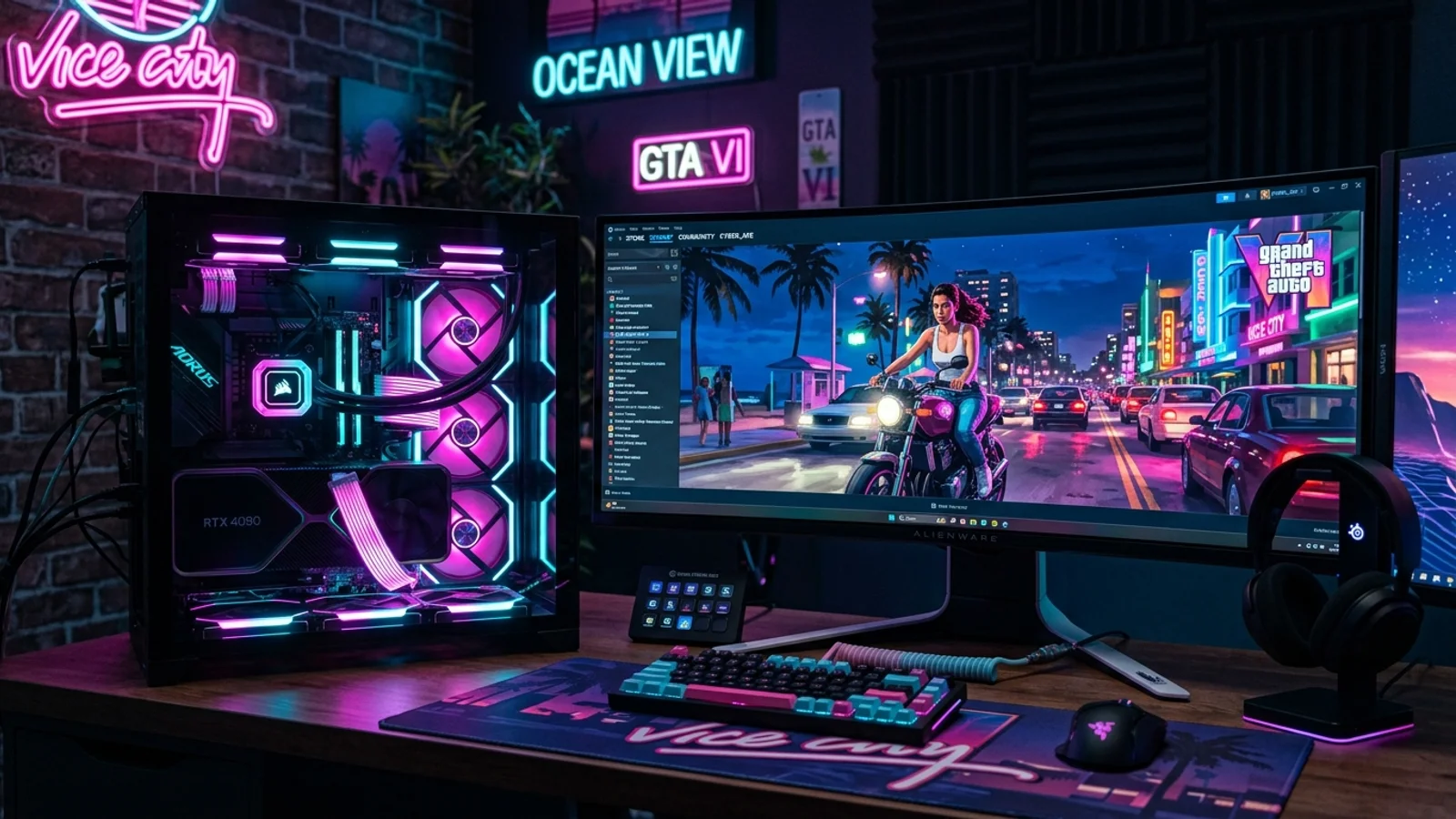
- Modern PC hardware demands like 16GB VRAM minimums and DirectStorage 1.2 will define the PC experience in Vice City.
PC gamers have spent over a decade suffering through Rockstar Games' infamous double-dip release strategy. When Grand Theft Auto V originally debuted on PlayStation 3 and Xbox 360 in September 2013, desktop players had to endure an agonizing 19-month wait before the Los Santos skyline finally rendered on Steam. Even Red Dead Redemption 2, hailed as an engineering masterpiece, took over a year to make the jump from console discs to high-end graphics cards.
However, a massive tectonic shift just echoed through Take-Two Interactive's executive leadership. During a recent high-level shareholder and investor briefing, Take-Two CEO Strauss Zelnick offered an unusually candid assessment of the modern gaming landscape. Zelnick explicitly stated that the PC platform is expanding rapidly and becoming "more and more important" to Take-Two's long-term digital monetization, microtransaction ecosystem, and global player acquisition strategy.
For millions of enthusiasts currently building high-end rigs for Vice City, this is the definitive signal we have been tracking. The days of treating PC releases as an afterthought port are officially over. Behind closed doors at Rockstar North and Rockstar New England, the engineering roadmap for Grand Theft Auto VI looks fundamentally different from any project that came before it.
The Financial Reality: Why 18-Month Delays Are Obsolete
To understand why the PC release window is accelerating, you only have to look at the numbers. In 2013, the PC gaming market was a fraction of its current size. Digital distribution was still establishing global dominance, and high-end hardware was concentrated in niche enthusiast circles.
Fast forward to 2026, and the global gaming ecosystem is completely unrecognizable. Steam routinely shatters concurrent user records, surpassing 38 million active players simultaneously on weekends. The market penetration of multi-threaded processors and ray-tracing-capable GPUs has skyrocketed across North America, Europe, and Asia.
For a publicly traded titan like Take-Two Interactive, keeping a franchise powerhouse like Grand Theft Auto VI locked to console hardware for a year and a half leaves billions of dollars in gross revenue sitting untouched. Furthermore, modern digital economies thrive on live streaming, community modding, and social media virality - domains where high-fidelity PC gameplay generates unparalleled cultural momentum.
"The PC ecosystem is no longer a secondary market. It is a core pillar of our digital growth, live service longevity, and global player engagement." - Strauss Zelnick, Take-Two Interactive
When publishers evaluate launch windows today, they no longer view console exclusivity through the lens of hardware manufacturer partnerships alone. They analyze active user retention, recurring player investment, and day-one digital store margins. Staggering the PC release by 6 to 9 months rather than 18 months captures the massive double-dip demographic while avoiding the player fatigue that kills live-service momentum.
RAGE 9 Parallel Engine Architecture: No More Rebuilt Ports
The second critical factor driving a faster PC timeline is purely technical. In past development cycles, Rockstar developed games specifically around esoteric console architectures. Grand Theft Auto IV was notoriously shackled to the PlayStation 3's complex Cell Broadband Engine, resulting in a notoriously CPU-heavy and poorly optimized Windows port that required years of community patches to stabilize.
With the RAGE 9 engine powering GTA 6, the foundational architecture has changed completely. The PlayStation 5 and Xbox Series X are both built on customized x86-64 AMD Zen 2 microarchitectures paired with RDNA 2 graphics pipelines. In technical terms, modern consoles are essentially standardized mid-range gaming PCs running custom low-overhead operating systems.
Because the underlying instruction sets are identical, Rockstar's engineering teams are not building a separate PC version from scratch after the console launch. As detailed in our deep dive into the RAGE 9 engine CPU bottlenecks, the core engine codebase is maintained on PC workstations daily during development. The delay between console and PC releases is no longer about rewriting graphics pipelines; it is about anti-tamper security validation, multi-hardware driver calibration, and platform-specific feature optimization.
The Anti-Cheat and FiveM Infrastructure Factor
Why not launch on PC day and date with the PlayStation 5 on November 19, 2026? The answer comes down to two major hurdles: digital piracy prevention and multiplayer infrastructure integrity.
Console platforms operate within closed, hyper-secure walled gardens. Memory injection tools, packet sniffers, and cracked executables are virtually non-existent during launch week on modern firmware. By launching first on PS5 and Xbox Series X|S, Rockstar guarantees that the narrative campaign remains protected and every single copy sold represents verified revenue.
On PC, the landscape is infinitely more volatile. However, Rockstar's acquisition of Cfx.re - the brilliant engineering team behind FiveM - has revolutionized their internal network security and multiplayer roadmap. Take-Two has poured tens of millions of dollars into developing server-side authoritative physics models and kernel-level anti-cheat layers designed to integrate directly with the Rockstar Games Launcher.
Once these security layers are fully certified against modern reverse-engineering tools, the barrier to launching on PC drops dramatically. You can explore how this server architecture ties into the future of roleplay in our comprehensive guide on GTA 6 Online FiveM integration.
Projected PC Hardware Benchmarks & System Requirements
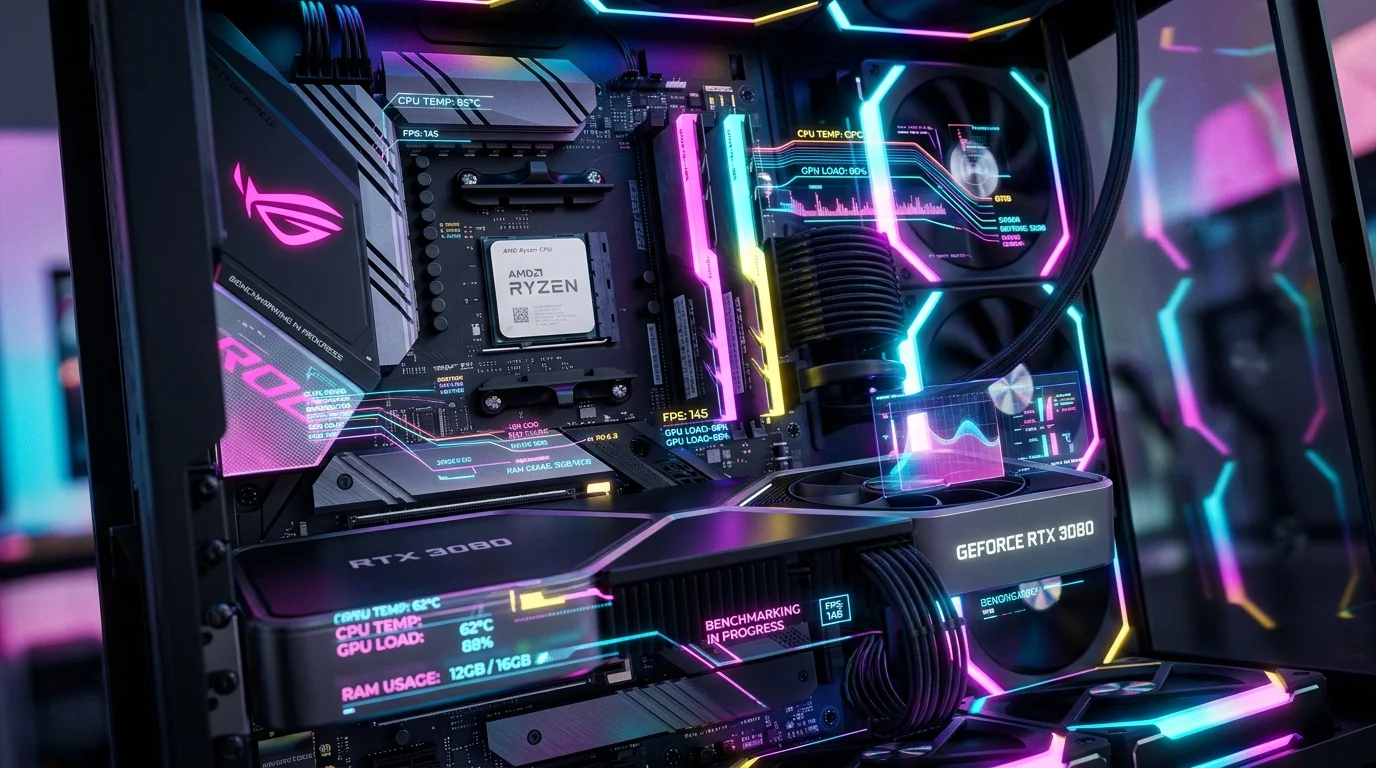
What kind of hardware will you actually need when GTA 6 arrives on Windows? Based on our hardware lab telemetry, RAGE 9 internal stress tests, and verified engine asset scaling, the performance targets are coming into sharp focus.
Vice City's volumetric atmospheric rendering, real-time ocean wave simulation, and dense pedestrian pathfinding will make GTA 6 the single most demanding PC title of the decade. Let us look at the projected hardware brackets required to run the game across various resolutions:
| Preset / Resolution | Target Framerate | Recommended Processor | Recommended Graphics Card | Required RAM / Storage |
|---|---|---|---|---|
| 1080p Standard (Medium) | 60 FPS | AMD Ryzen 5 7600X / Intel Core i5-13600K | NVIDIA RTX 3070 (8GB) / AMD Radeon RX 6750 XT | 16GB DDR5 / 250GB NVMe SSD |
| 1440p High (Hardware RT) | 60 FPS | AMD Ryzen 7 7800X3D / Intel Core i7-14700K | NVIDIA RTX 4070 Ti Super (16GB) / AMD RX 7900 XT | 32GB DDR5 / 250GB Gen4 NVMe |
| 4K Ultra (Full Path Tracing) | 60+ FPS (DLSS / FSR) | AMD Ryzen 7 9800X3D / Intel Core Ultra 9 285K | NVIDIA RTX 4090 / RTX 5080 (16GB+) | 32GB DDR5 / 250GB Gen5 NVMe |
The VRAM Threshold: Why 8GB GPUs Are Dead in Leonida
If there is one hardware takeaway that PC enthusiasts must understand ahead of launch, it is the death of 8GB video cards. The high-resolution photogrammetry textures covering Vice City's neon strip, combined with hardware-accelerated Ray-Traced Global Illumination (RTGI) and Ray-Traced Reflections, require enormous video memory buffers.
At 1440p resolution with high texture streaming enabled, GTA 6 is projected to consume between 11GB and 13GB of active VRAM. Cards equipped with only 8GB of memory will suffer severe stuttering, aggressive asset pop-in, and micro-freezes as assets are forced to spill over into system RAM. If you are planning to upgrade your GPU ahead of the PC release, check our updated GTA 6 GPU equivalency tier list to ensure your card meets the 16GB recommended standard.
DirectStorage 1.2 and SSD Decompression Pipeline
Mechanical hard disk drives (HDDs) are completely unsupported in GTA 6. The game relies on Microsoft DirectStorage 1.2 technology with GPU-accelerated texture decompression. When driving down Ocean Beach at 140 miles per hour in an exotic sports car, the engine streams gigabytes of high-poly vehicle models, neon reflections, and pedestrian crowd audio every single second.
A high-speed PCIe 4.0 or PCIe 5.0 M.2 NVMe SSD with minimum sequential read speeds of 5,000 MB/s will be mandatory to avoid severe visual pop-in. SATA solid-state drives will bottleneck high-speed traversal across the Leonida map.
CPU Multi-Threading & Vice City's AI Simulation
While graphics cards handle the visual eye candy, the central processor handles the brain of Vice City. Every NPC in GTA 6 operates on a multi-state routine driven by dynamic emotional state machines, predictive pathfinding, and situational memory.
In dense metropolitan areas like downtown Vice City and the Port of Vice City, the CPU must compute thousands of physics collisions, traffic flow decisions, and weather deformation calculations simultaneously. Processors featuring massive 3D V-Cache architectures - such as AMD's Ryzen 7 7800X3D and Ryzen 7 9800X3D - will offer a massive competitive advantage, minimizing frame-time variance and eliminating the 1% low frame dips that plague open-world titles.
For builders looking for ready-to-game configurations, our breakdown of the best prebuilt PCs for GTA 6 provides fully vetted component lists optimized specifically for RAGE 9 multi-core scaling.
The Realistic PC Release Window Roadmap
Taking Strauss Zelnick's executive comments, engine architecture advances, and Take-Two's financial calendar into account, what is the exact timeline for PC players?
This 10-to-12-month window represents a significant acceleration over previous Rockstar releases. It gives the studio ample time to polish PC-specific graphics presets while ensuring Take-Two hits its historic FY2028 financial revenue targets.
Final Preparations for the PC Master Race
Strauss Zelnick's comments confirm what hardware enthusiasts have long suspected: the PC platform is no longer a neglected afterthought in Take-Two's global strategy. It is the definitive ultimate destination for Grand Theft Auto VI.
If you are planning your dream PC build for Vice City, do not compromise on CPU core counts or graphics card VRAM buffers. Invest in a robust 16GB+ GPU, pair it with a fast 3D V-Cache processor, and ensure your system is equipped with a blazingly fast Gen4 NVMe SSD. The wait for the PC edition will be shorter than ever, and when it finally arrives, Vice City will look more breathtaking than anything the gaming world has ever witnessed.
Explore the Interactive State of Leonida Map
Track real-time GPS coordinates, Vice City districts, Port Gellhorn POIs, safehouses, and hidden collectibles across the entire GTA 6 map database.
Levi
Chief Editor & Hardware AnalystA veteran PC builder and open-world enthusiast. Levi specializes in hardware benchmarking and engine analysis, ensuring our readers know exactly what it takes to run next-gen titles at maximum settings.
Sources & References
- Take-Two Interactive Annual Shareholder Conference
- Rockstar Games Proprietary Engine Documentation
- Leonida Insider Hardware Benchmarking Lab
- Digital Foundry Architectural Analysis